Understanding Festive Food Styling Through Emotion, Movement, and Tradition
Holi is one of India’s most expressive festivals. It celebrates joy, colour, spontaneity, and togetherness. Unlike formal festivals, Holi is rooted in play — colours are thrown freely, clothes are stained without concern, and laughter takes precedence over order. The food associated with Holi carries this same spirit of informality and abundance.
Holi dishes are not prepared to be admired from a distance. They are meant to be shared quickly, eaten with coloured hands, passed around between people, and enjoyed in the middle of celebration. Because of this, Holi food styling follows a very different philosophy compared to everyday meals or restaurant presentations.
The goal of styling Holi food is not to create a perfect visual composition. It is to create a sense of joy, warmth, and lived-in celebration.
What Makes Holi Food Styling Different?
Holi food styling stands apart from other festive or editorial food styling because it prioritises emotion over precision. The food must feel approachable, generous, and playful rather than polished or controlled.
A well-styled Holi spread should feel:
Playful, not rigid
Abundant, not calculated
Festive, not decorative
Lived-in, not staged
This balance is difficult to achieve. Too much control removes warmth, while too little control creates visual chaos. The role of the food stylist is to guide the energy of Holi without suppressing it.
Step 1: Embracing Intentional Imperfection
One of the defining principles of Holi food styling is intentional imperfection.
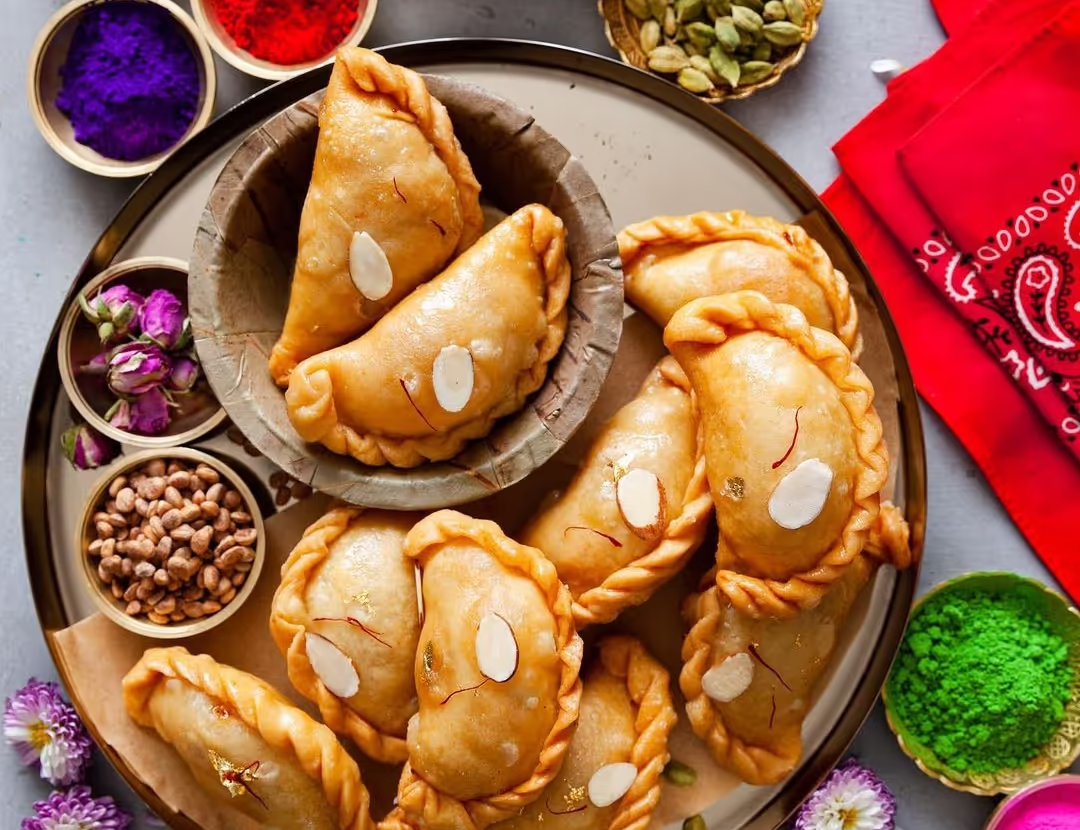
Holi sweets and snacks should never look factory-perfect. Slightly uneven gujiyas, imperfect laddoos, irregular sugar dusting, or casually stacked snacks make the food feel handmade and real. These imperfections signal care, effort, and authenticity.
Perfect symmetry and precision can make food feel distant — as if it exists only for display. Holi food needs to feel touched, shared, and enjoyed. Imperfection adds humanity to the frame.
Step 2: Creating a Sense of Movement
Holi is an active, energetic festival, and food styling must reflect that movement.
Static, perfectly aligned compositions feel unnatural for Holi. Instead, the frame should suggest interruption and interaction — plates that appear mid-use, bowls that feel recently reached into, sweets arranged loosely rather than symmetrically.
This sense of movement creates realism. It allows the viewer to imagine the celebration happening around the food, rather than the food existing in isolation.
Step 3: Using Colour with Restraint
Holi is associated with bright colours, but Holi food styling does not require excessive or artificial hues. Overuse of colour can overpower appetite and make food feel decorative rather than edible.
Natural food colours should lead:
The golden fry of gujiyas
The creamy whites of thandai and malai
The warm browns of nuts, khoya, and jaggery
Festive colour is best introduced through subtle accents — props, backgrounds, or small garnishes — rather than dominating the food itself. Playful colour should feel joyful, not chaotic.
Step 4: Texture as an Anchor for Appetite
Texture is what grounds playful styling and keeps food appetising.
Powdered sugar settling naturally, crushed nuts scattered loosely, frothy thandai, or cracked edges on sweets add depth and realism. These textures prevent food from looking flat or graphic under studio lighting.
Texture reassures the viewer that the food is fresh, handmade, and meant to be eaten — not just photographed.
Step 5: Styling Food to Feel Shared
Holi is a communal celebration, and the food should reflect that sense of sharing.
Visual cues such as visible spoon marks, slight spills, uneven stacks, or casually placed elements make the food feel welcoming. When food looks shared, it becomes emotionally inviting.
This approach transforms a styled plate into a lived-in moment, encouraging connection rather than admiration from afar.
Why “Perfect” Food Doesn’t Work for Holi
Perfect food suggests distance, control, and restraint. Holi celebrates closeness, freedom, and excess.
Over-styled food can feel cold and untouchable — the opposite of what Holi represents. Playful food, on the other hand, feels generous, warm, and human. It invites participation rather than observation.
Holi food should look like it belongs in hands, not behind glass.
Final Thoughts
Holi food styling is not about visual perfection. It is about capturing joy, movement, and emotion. When food is styled playfully — with balance, restraint, and authenticity — it reflects the true spirit of the festival.
The most successful Holi food visuals are the ones that feel alive, familiar, and welcoming.
Because Holi is not about control — it is about connection.
Strong CTA
If you want festive food visuals that feel playful, authentic, and emotionally connected — not staged or overly perfect — let’s create them together.